
FDA approved. CE certified.
Still can't sell in Israel without AMAR.
23 years working directly with Israel's Medical Device Division. We translate your existing dossier, classify your device, and submit on your behalf. 100% of our registrations have been approved.
- Accurate device classification
- FDA / CE dossier translation and adaptation
- Submission and follow-up — only with us
- Full response to all regulator queries
- Hebrew labeling and IFU consultation
- 100% approved registrations
“Without the professional guidance and support of Shai and the LIS team, we could not have met the standard's requirements.” — Yossi Gutman, A.N.G.S Systems Ltd.
What is AMAR
Without AMAR approval, you cannot sell medical devices in Israel.
AMAR — the Medical Device Division of the Israeli Ministry of Health — is Israel’s regulator for medical devices, equivalent in role to the US FDA. Every importer, manufacturer or distributor wanting to market a device in Israel must register. The process includes device classification, submission of a technical file, international approvals (FDA / CE) where applicable, and response to regulator queries. We handle this entire front for you.
Sound familiar?
Your device is ready. The Israeli MOH portal — less so.
Your US or European dossier is already in hand. Now you’re asked to submit 15 documents in Hebrew, in a format the MOH portal accepts, with evidence it’s unclear where to find. Meanwhile, an Israeli customer is waiting for the order.
You filled out a form on the MOH website and got back a request for 15 documents you don't recognize, don't know how to obtain, and don't know who to send them to.
The first PO has been approved — but you can't ship until AMAR is in hand. Every day of delay is a day of lost revenue.
An FDA or CE file is ready in English — but it doesn't match Israeli requirements. It needs to be translated, adapted and supplemented.
Simple Class I or Class IIa? Class III? Each classification triggers a different document list — and a wrong call costs months of unnecessary work.
Regulatory Classification
Every device has a Class — and the Class determines everything that follows.
In an upfront consultation we tell you exactly which classification applies to your device, what the requirements are, and how long it will take.
Low Risk
Relatively simple devices, with no body penetration or only temporary contact. The registration process is the shortest.
Medium Risk
The most common category. Requires a full technical file, evidence of safety and performance, and frequently a valid CE / FDA approval.
High Risk
Devices with direct impact on patient life. They require an extensive dossier, full clinical evidence, and sometimes ongoing surveillance.
How it works
Five structured steps — from classification to certificate in hand.
Regulatory classification — opening step
A short call about the device. Within two days you know with certainty which Class applies and what your requirements are.
Precise requirements mapping
A clear list of every document you need — by classification, device type, and the source of any existing dossier (FDA / CE).
Submission file preparation
Translation and adaptation of foreign dossiers into Hebrew. Filling document gaps. Review of labeling, IFU and packaging against Hebrew requirements.
Submission and regulator response
We submit through the MOH portal, monitor progress, and respond to every request for correction or supplementary information.
Final approval + go-to-market
After the certificate is issued — guidance on labeling, IFU, import declarations, and where needed registration with additional agents.
Ongoing support
Annual registration renewals, technical file updates, and response to every AMAR inquiry — across the full product lifecycle.
Why Lis Quality
23 years of direct experience with the Medical Device Division. We know the people — and the unwritten requirements.
Deep familiarity with the regulator
23 years working with AMAR. We know the reviewers, the standards, and what the system expects — even when it isn't written in the procedures.
100% approved registrations
We've never come back with a rejection. Ever. Our submissions get through because we know what to include — and what to leave out.
One-stop for every classification
From simple Class I to complex Class III — we handle the entire scope. And FDA / CE / ISO 13485 too if you need them.
No surprises along the way
One comprehensive quote, up front. Every document you'll need is listed in it. No "add-ons" and no "open billable hours".
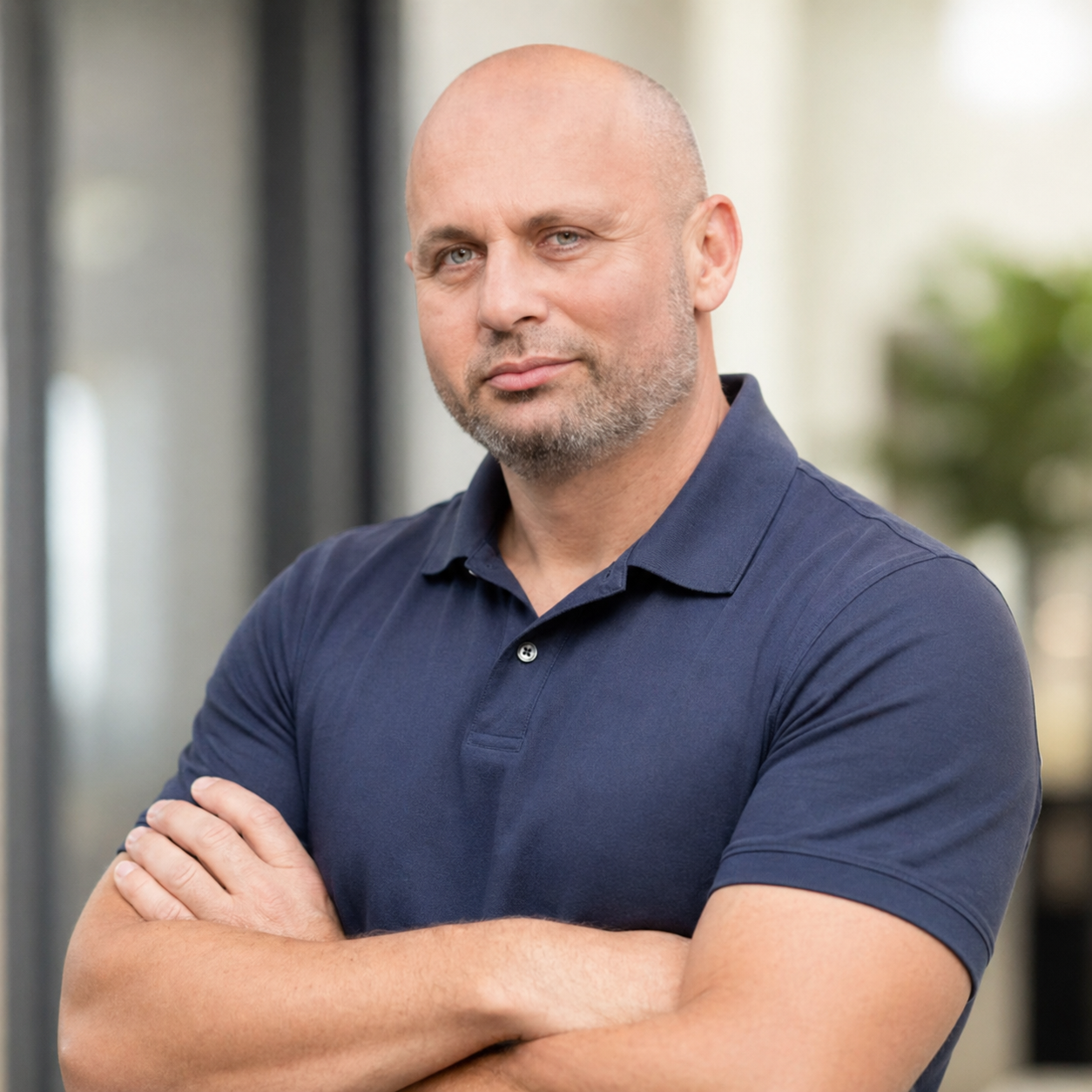
Meet Shai Lis
The person handling your registration is the owner — not a junior associate.
Shai Lis has led Lis Quality since 2002. Over the years he has handled AMAR registrations for dozens of devices, from simple Class I to complex Class III — including imports of US and European devices, registrations for local manufacturers, and rescuing cases that stalled with other consultants.
He works directly with the Medical Device Division himself. No “our team will get back to you.”
What Our Clients Say
Without the professional guidance and support of Shai and the LIS team, we could not have met the standard's requirements. We gained immensely from his deep knowledge and extensive experience in work processes, especially in our facility.
To Shai and the dear team — after a challenging ISO 13485 audit day, I want to thank you for your professional approach to understanding our organization's unique needs, your creative thinking in finding solutions, and the specific tailored work methods that aren't visible on the surface.
Frequently Asked Questions
The questions importers and manufacturers ask us before getting started.
Who needs AMAR approval?
+
Every manufacturer, importer or distributor of medical devices in Israel. From accessories and simple devices (Class I) to complex devices (Class III). If the product is used for diagnosis, monitoring, treatment or recovery — it requires AMAR registration.
If I have FDA approval — am I exempt from AMAR?
+
No. FDA is the US regulator. AMAR is the Israeli regulator. A US (FDA) or European (CE) approval is strong supporting evidence that accelerates the process — but does not replace it. A separate AMAR registration is mandatory.
How long does it take?
+
It depends on classification and the quality of the existing dossier. Class I with a valid CE / FDA — a faster path. Class III without an existing dossier — a more comprehensive path. In a brief consultation we’ll agree on a realistic timeline.
What is Class I / II / III?
+
A regulatory classification by the device's risk level. Class I — low risk, fast registration. Class II (a/b) — medium risk, the most common category. Class III — high risk, requires full clinical evidence.
We're foreign manufacturers — do we need an Israeli Authorized Representative?
+
Yes. Foreign manufacturers without a legal entity in Israel must appoint a local Authorized Representative (AR) who holds the AMAR license and is the legal interface to the MOH. We can act as your AR or work alongside an importer who serves as one. Most of our clients are foreign manufacturers entering the Israeli market.
What happens if the MOH requests additional documents?
+
It's part of the process. There is almost always a round of correction requests. We handle the entire response — without you needing to read Israeli regulation or translate documents yourselves.
Will we also need ISO 13485?
+
Usually yes, especially from Class IIa upward. ISO 13485 is the foundation of any regulatory certification in medical devices. If you don't have it — we run ISO 13485 in parallel.
How much does it cost?
+
Depends on the classification, the scope of the existing dossier, and the complexity of the product. In a 15-minute consultation we'll provide an accurate range. Full disclosure, no add-ons later.
Complete your regulatory journey
Need ISO 13485 or FDA / CE as well? We handle the entire pathway.
ISO 13485 Certification
Quality management for medical devices — the foundation of every regulatory approval worldwide.
ISO 9001 Certification
Universal quality management standard — for manufacturing, services and engineering companies.
Not sure what you need?
A 15-minute conversation — we’ll come back with an accurate pathway based on your product and target market.
Let’s get started
Send us your device details. We'll come back with classification, document list, and timeline — in one call.
You send us the device details. We come back promptly with: which Class it belongs to, which documents are required, and a realistic timeline. No commitment. No pressure.
Three fields. We'll come back with a professional assessment — not a high-pressure pitch.
No commitment. No mailing list. We reply within one business hour.